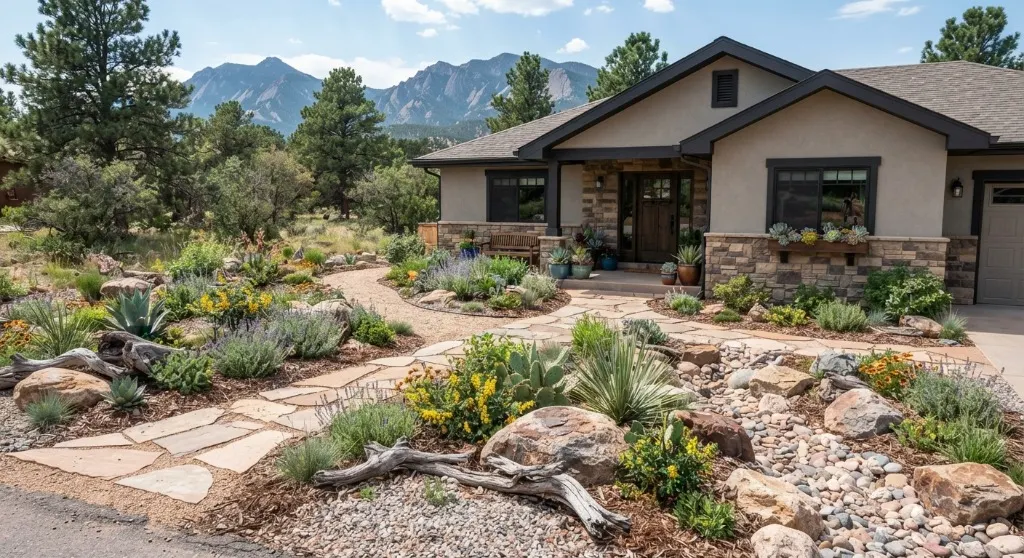
Traditional grass lawns present significant challenges in Colorado's semi-arid climate. They require substantial water inputs, frequent maintenance, and often struggle to thrive despite our best efforts. As water conservation becomes increasingly important and environmental awareness grows, many homeowners are seeking beautiful, sustainable alternatives that reduce water usage while enhancing their outdoor spaces.
The good news is that there are numerous attractive, low-water options that can replace or supplement traditional turfgrass. These alternatives not only conserve precious water resources but often provide additional benefits like reduced maintenance, enhanced biodiversity, and unique aesthetic appeal. Here's our comprehensive guide to water-wise lawn alternatives that thrive in Longmont and Boulder County:
1. Xeriscaping with Native and Drought-Tolerant Plants
Xeriscaping—landscaping that reduces or eliminates the need for irrigation—is perhaps the most comprehensive approach to water-wise gardening:
- Plant selection: Focus on native Colorado plants and drought-tolerant varieties adapted to our climate
- Soil preparation: Amend soil with organic matter to improve water retention while maintaining good drainage
- Mulching: Apply 2-3 inches of organic mulch (wood chips, bark) to reduce evaporation and suppress weeds
- Efficient irrigation: When watering is needed, use drip irrigation or soaker hoses to deliver water directly to plant roots
Native options like blanket flower, penstemon, yarrow, and native grasses provide color, texture, and habitat for pollinators while requiring minimal supplemental water once established.
2. Ornamental Grasses and Grass-Like Alternatives
Ornamental grasses provide the soft, flowing texture many associate with lawns but with far lower water requirements:
- Native grasses: Buffalo grass, blue grama, and sideoats grama are native to Colorado prairies
- Adapted varieties: Certain fescue and wheatgrass cultivars perform well with minimal water
- Sedges and rushes: Plants like carex and juncus provide grass-like appearance in moist areas
- Maintenance: Most require only annual cutting back in early spring
These alternatives create beautiful, meadow-like landscapes that move gracefully in the wind and provide seasonal interest.
3. Hardscaping with Permeable Surfaces
Replacing lawn areas with permeable hardscaping eliminates water needs entirely while providing functional outdoor spaces:
- Flagstone and bluestone patios: Create beautiful, durable outdoor living areas
- Permeable pavers: Allow water to infiltrate while providing stable surfaces for walkways and driveways
- Gravel and decomposed granite: Excellent for pathways, sitting areas, and xeriscape beds
- Steel and wood edging: Define spaces and prevent material migration
These surfaces reduce water consumption, minimize maintenance, and can help manage stormwater runoff on your property.
4. Artificial Turf: A Controversial Option
While not without drawbacks, high-quality artificial turf can be appropriate in specific situations:
- Water savings: Eliminates irrigation needs entirely
- Use cases: Small areas, dog runs, or spaces where natural grass won't grow
- Considerations: Heat retention, environmental impact, and end-of-life disposal
- Quality matters: Look for products with good drainage, UV protection, and realistic appearance
We generally recommend limiting artificial turf to small, specific applications and prioritizing living landscapes whenever possible.
5. Edible Landscaping and Herb Gardens
Combining water efficiency with food production creates multi-functional outdoor spaces:
- Herb gardens: Many herbs (thyme, oregano, sage, lavender) are naturally drought-tolerant
- Vegetable integration: Use raised beds with efficient irrigation for food production
- Fruit bushes: Currants, gooseberries, and certain cherry varieties adapt well to our climate
- Design integration: Blend edible plants with ornamental specimens for beauty and utility
This approach reduces water usage while providing fresh, homegrown produce and connecting you more deeply to your outdoor space.
Implementation Strategies
Transitioning to a water-wise landscape doesn't have to happen all at once. Consider these approaches:
- Phased conversion: Replace lawn areas gradually over several seasons
- Zone approach: Create oases of higher-water-use plants near living areas, surrounded by low-water zones
- Focus on problem areas: Start with areas where grass struggles to grow (slopes, shade, poor soil)
- Use lawn alternatives strategically: Keep small areas of traditional grass for specific purposes (play areas, pet zones)
Proper planning and design ensure that your water-wise landscape is not only sustainable but also beautiful and functional.
By embracing water-wise lawn alternatives, you'll significantly reduce your outdoor water consumption, decrease maintenance time and costs, and create a more resilient, environmentally friendly landscape that's uniquely suited to Colorado's climate. Many of these options also provide enhanced habitat for beneficial insects, birds, and other wildlife.
Ready to explore water-wise options for your property? Our design team specializes in creating beautiful, sustainable landscapes that thrive in our unique environment. Schedule a consultation today to discuss how we can help you reduce water usage while enhancing your outdoor living space.
Related project: Front Yard Lawn Stripping & 12-Ton River Rock Conversion stripped patchy turf and replaced it with river rock and low-water plantings — the phased conversion above, done in one pass.