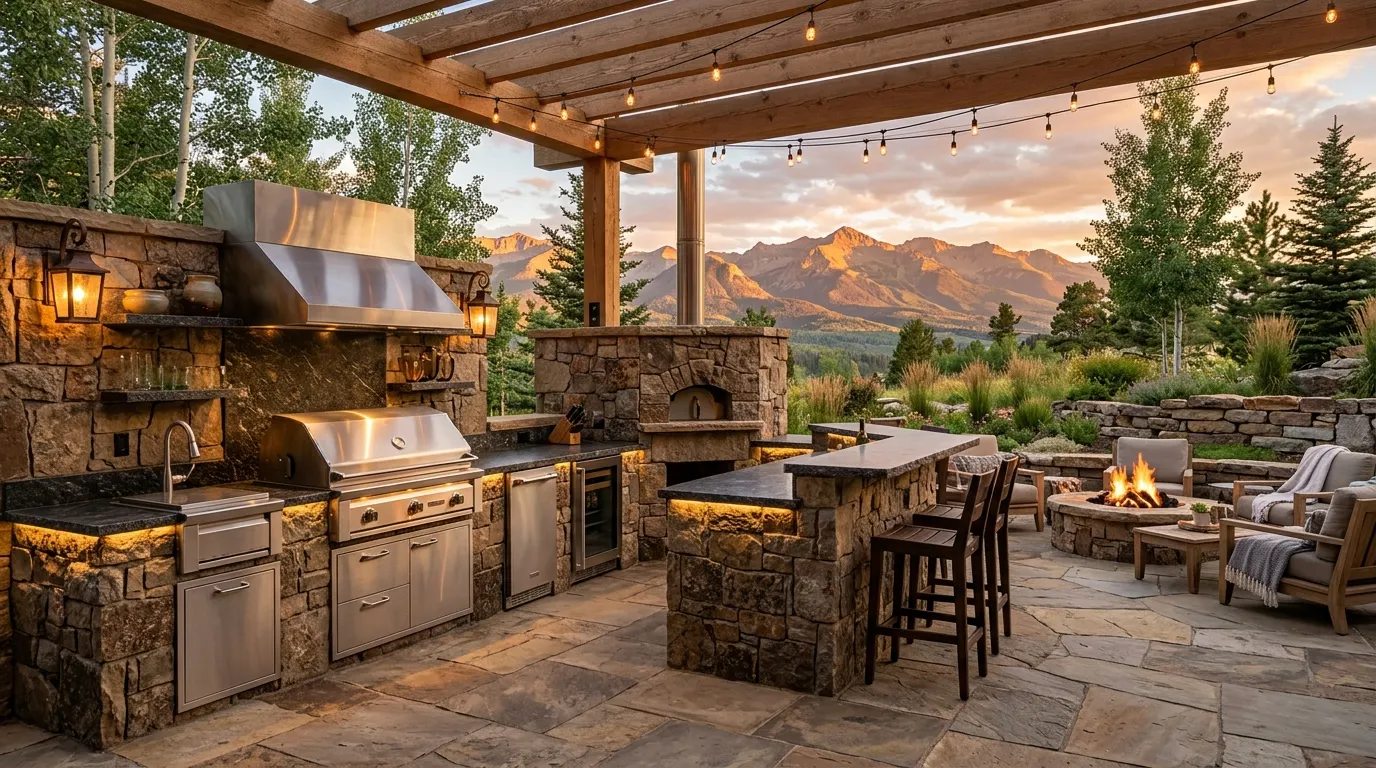
An outdoor kitchen transforms a backyard patio from a simple seating area into an elevated social hub and culinary destination. Whether hosting summer barbecues in Longmont or enjoying cozy autumn dinners in Boulder, a thoughtfully designed outdoor kitchen allows you to cook, entertain, and stay connected with guests without running back and forth to the indoor kitchen.
However, building a functional outdoor kitchen requires more than just plopping a grill onto a patio. To ensure your kitchen performs effortlessly across Colorado’s distinct seasons, careful attention must be paid to layout workflow, durable material selection, utility integration, and comfort features.
1. Establish Functional Cooking & Prep Zones
Just like indoor kitchen design relies on the classic "work triangle," outdoor kitchens benefit from clearly defined functional zones:
- Hot Zone: The primary cooking area including built-in gas grills, side burners, smokers, or wood-fired pizza ovens. Proper ventilation and heat shielding are essential here.
- Cold Zone: Refrigeration, wine coolers, or built-in ice chests to keep ingredients fresh and beverages cold at arm's reach.
- Wet Zone: Outdoor sinks with hot/cold water feeds and trash/recycling pull-outs for easy prep and cleanup.
- Dry & Prep Zone: Ample countertop surface (at least 36 inches of contiguous space beside the grill) and weatherproof stainless steel storage drawers.
2. Select Materials Built for Colorado's Climate
Colorado experiences intense UV exposure, sudden temperature swings, and severe freeze-thaw cycles in winter. Inferior materials will crack, warp, or fade rapidly. We recommend:
- Countertops: Honed granite or dense quartzite. Avoid porous stones or dark surfaces that absorb extreme summer heat under direct sunlight.
- Cabinetry & Base Structures: Steel studs clad with stone veneer, stucco, or marine-grade polymer (HDPE) cabinetry that resists moisture and rot.
- Appliances: 304 stainless steel appliances designed specifically for outdoor weather resistance.
3. Integrate Shelter, Shade, and Four-Season Heating
To maximize usability from early spring through late winter, incorporate environmental controls into your design:
- Pergolas and Covered Pavilions: Protect the cook from direct sun and unexpected high-plains rain showers.
- Infrared Radiant Heaters: Ceiling-mounted infrared heaters extend your outdoor dining season comfortably into chilly autumn nights.
- Fire Features: Adjacent fire pits or outdoor fireplaces create a natural gathering spot for guests while food is being prepared.
4. Utilities and Safety Planning
Seamless operation requires professional utility integration upfront. Ensure your design accounts for hardwired GFCI electrical outlets for appliances and task lighting, dedicated natural gas lines to eliminate propane tank swapping, and proper drainage for outdoor sinks.
Ready to bring your dream outdoor kitchen to life? Waxwing Landscaping designs and constructs custom outdoor living spaces tailored specifically to Boulder County properties. Contact us today for a personalized consultation.
Related service: Hardscaping in Longmont covers the patios and outdoor structures that make a four-season kitchen possible here.